QVR
Care records and staff training in one product family.
QVR serves staff who support people with intellectual and developmental disabilities. I built the native iOS app and worked on the Phoenix and Ash learning platform.
The problem
Support staff work in shifts. They record medications, daily living tasks, goals, behaviors, and incidents. They must also finish required training.
The signal at a care home can be weak, and the records are private. Each provider also needs its data kept apart from other providers.
Start with the shift
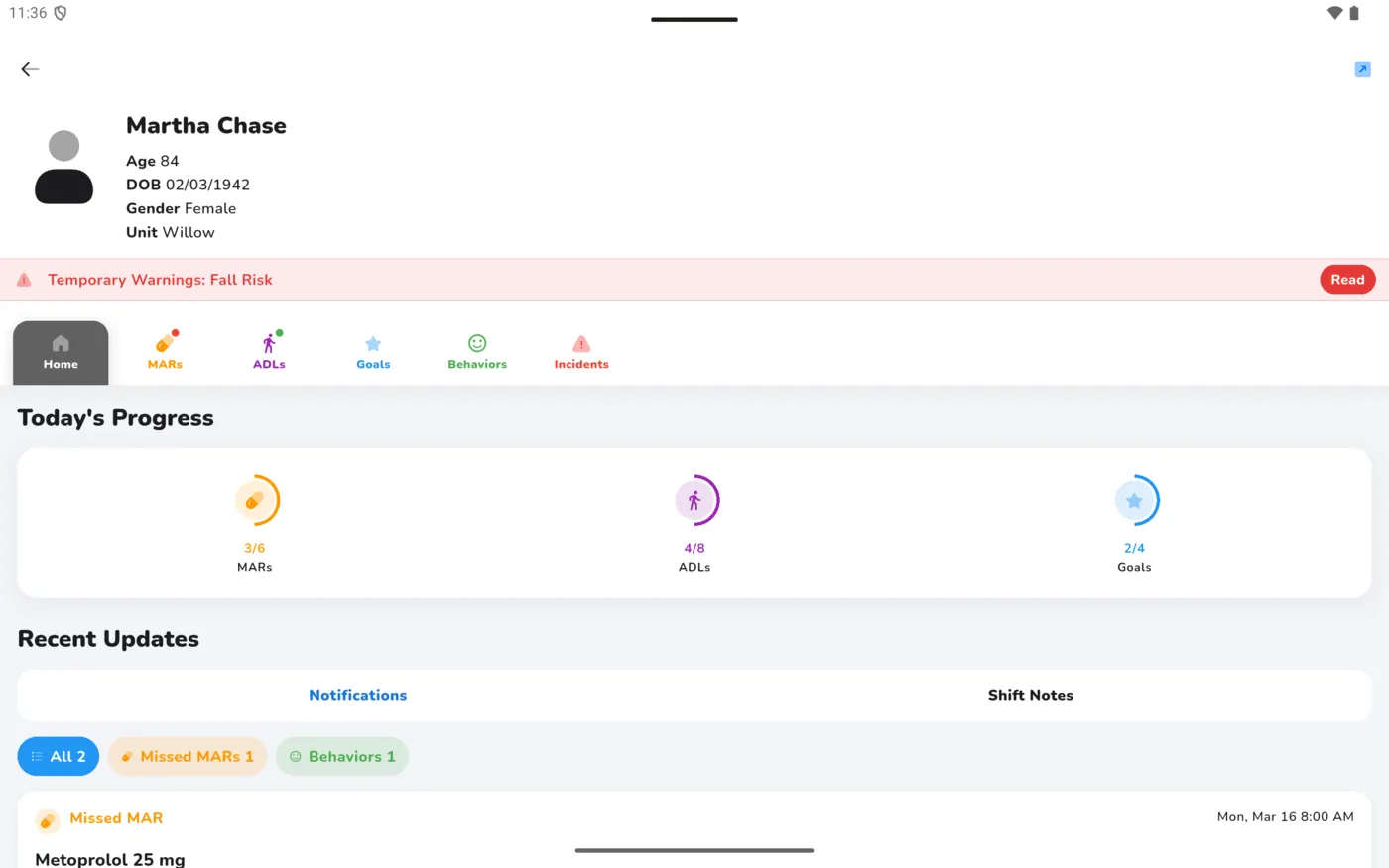
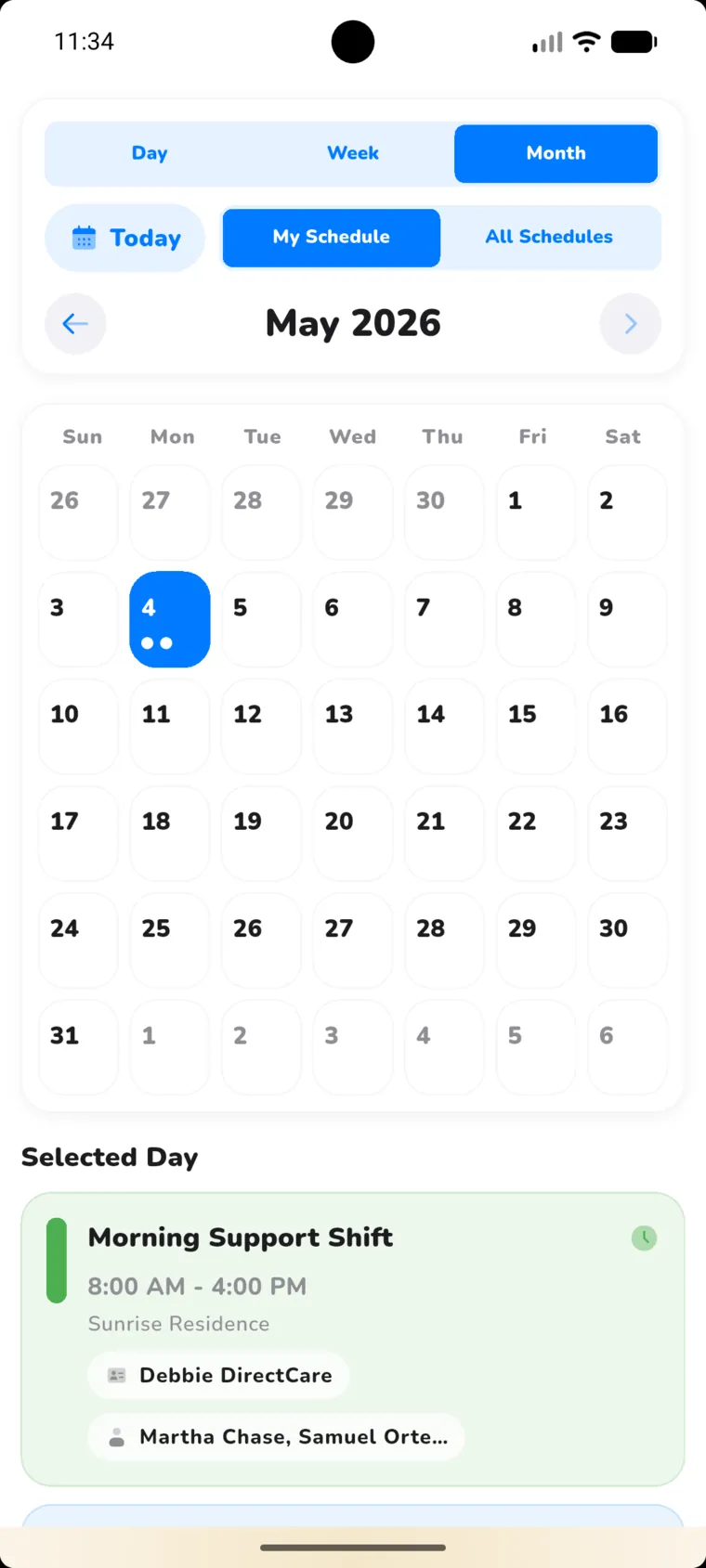
A staff member starts with the shift schedule. The shift leads to the residents and the care due that day.
These views come from the related Android app with sample data. I built the native iOS app, which covers the same shift and care workflow.
Record care, even with weak signal
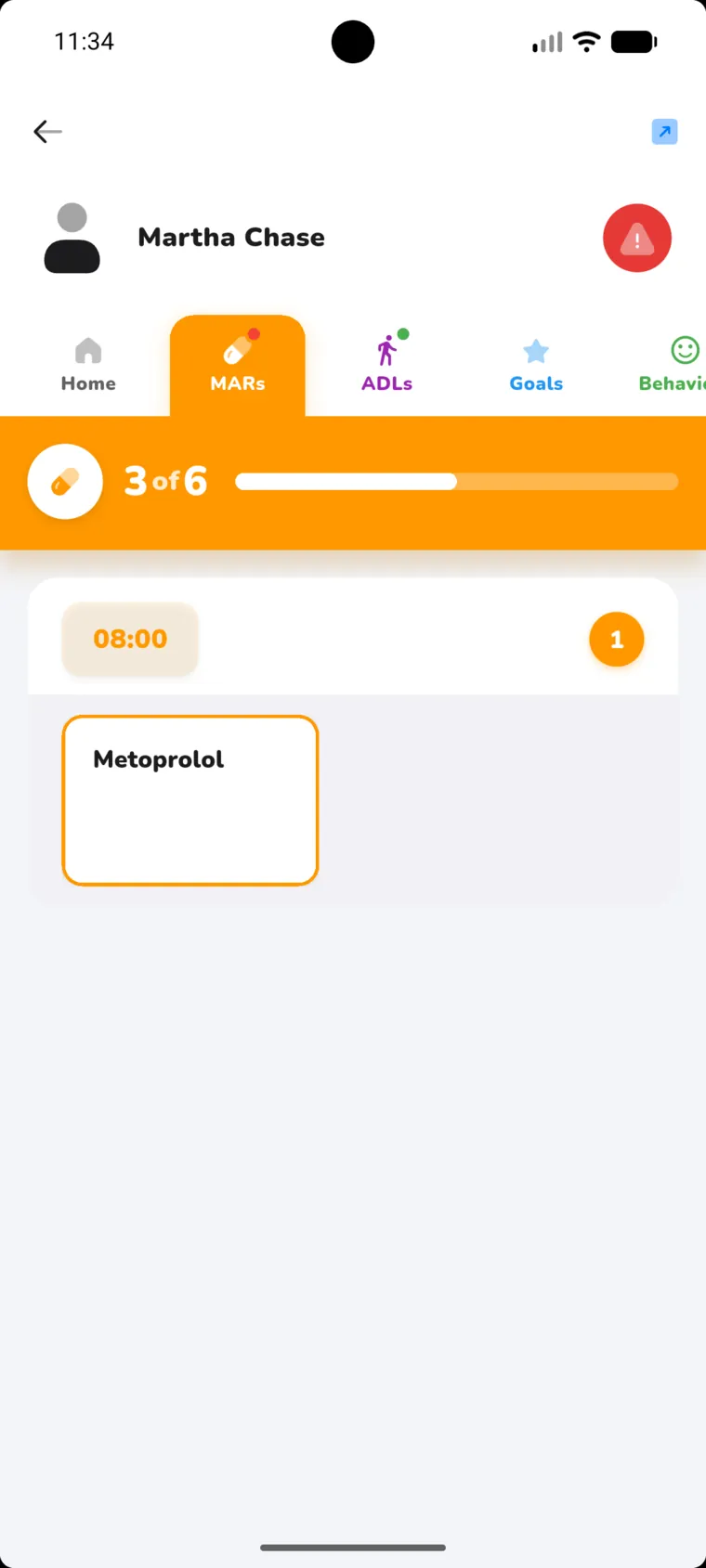
MAR means medication administration record. Staff mark each dose, task, and note as they work.
On iOS, I built offline-first storage on the device and secure sync with the QVR APIs. A weak connection does not stop the record.
Build and complete training
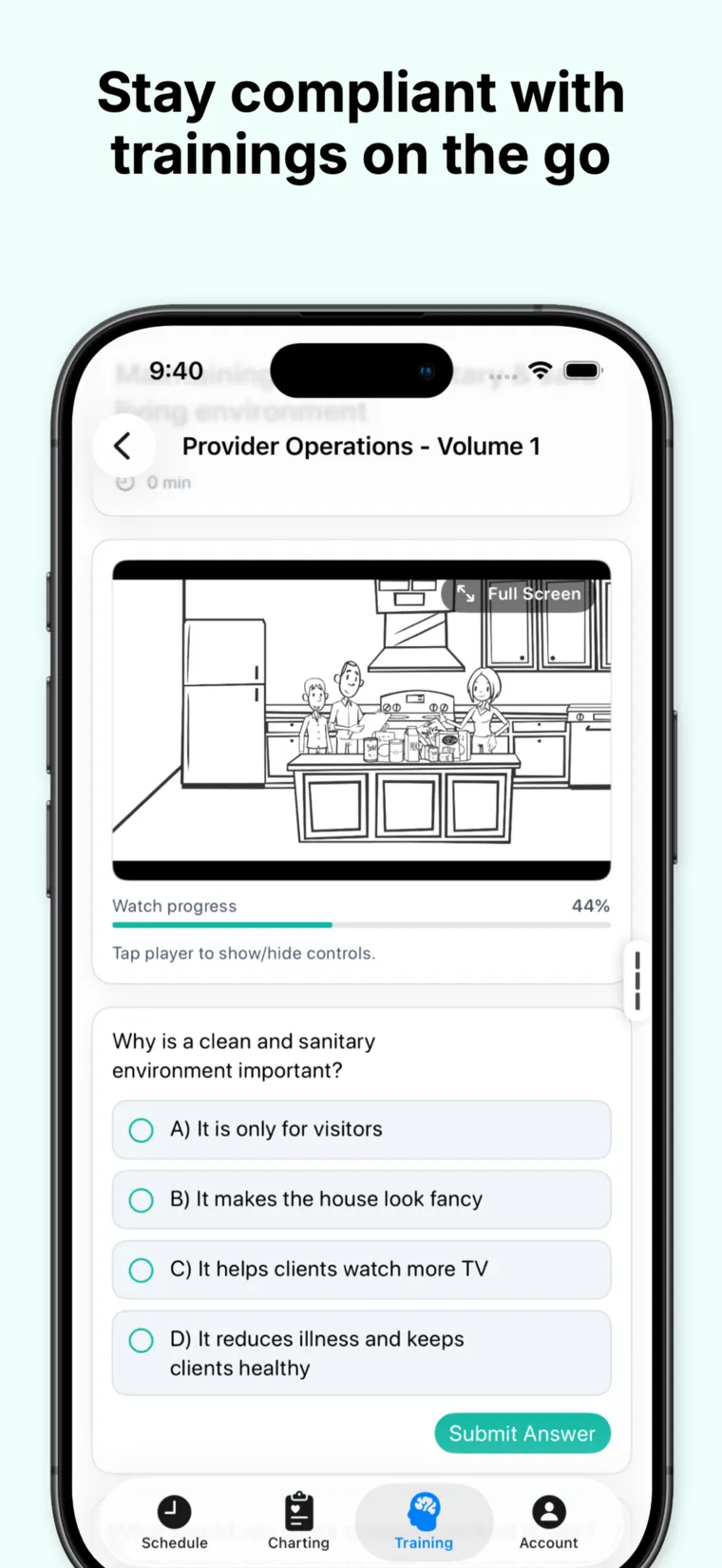
In the Phoenix and Ash learning platform, I built the course editor and its backend. Authors build lessons from seven content types: video, image, text, written response, two kinds of quiz, and documents.
The platform saves video progress, scores quizzes, and checks required items before a lesson is complete. Publishing a course version runs as an Oban job.
- Shared code One codebase for every provider.
- Data A separate database and file storage for each provider.
- Access Separate roles, secrets, and host names.
- Runtime Separate processes and deployment state.
What I built
- Native iOS app with offline-first storage
- Secure sync with the QVR APIs
- Course editor and backend with seven content types
- Video progress, quiz scoring, and completion checks
- BlueStep integration for compliance documents
- Provider isolation for data, roles, secrets, and deployment
- AWS infrastructure and blue/green releases
Result
- QVR Staff launched on iOS in March 2026. The Android app followed in May 2026.
- In August 2024 I briefed company leaders on AI, integrations, and how the app, learning platform, and QVR platform fit together.
- I continued the iOS and platform work through August 2026.
The phone and tablet care screens are from the Android demo with sample data, not native iOS screenshots. The training image is the current iOS App Store listing.